
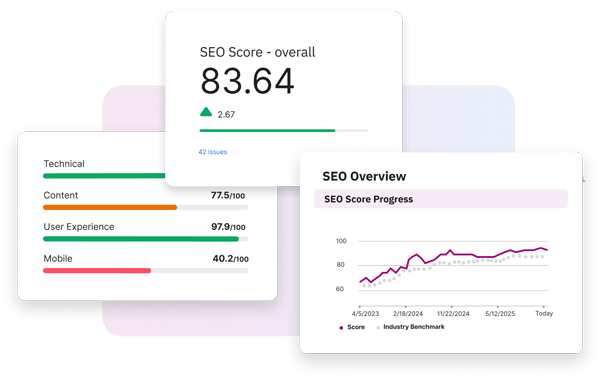
SEO Score Test: What It Measures and How to Improve Your Website
An SEO score test checks aspects of a website that may affect its visibility in search engines. It can highlight technical issues, missing information and opportunities to improve your pages. The result is useful as a starting point, but it is not a guarantee of higher rankings: no single score can capture every factor that influences search performance.
What is an SEO score test?
An SEO score test is an automated review of a webpage or website. Depending on the tool, it may examine page titles, meta descriptions, headings, links, image descriptions, loading performance, mobile usability and technical settings such as indexing instructions.
Different tools use different checks and scoring systems. A score of 80 from one service may not be directly comparable with an 80 from another. Treat the score as a guide to potential issues rather than an official search-engine rating.
What does an SEO test usually check?
On-page content
Tests may look at whether a page has a clear title, a useful meta description and a logical heading structure. They can also flag thin or repeated content. These checks help identify areas to review, but they cannot reliably judge whether a page fully answers a visitor’s needs.
Technical SEO
A technical review may check whether important pages can be crawled and indexed, whether a sitemap is available, and whether the site uses HTTPS. It may also identify broken links, redirect chains or problems with canonical tags.
Page experience
Page speed, mobile usability and layout stability can affect how easily people use a site. Some tools provide performance measurements, while others simply flag broad issues. Test key pages on real devices as well as relying on automated reports.
Links and images
An SEO score test may report missing image alt text, broken internal links or a lack of links between related pages. Alt text should describe an image where it conveys useful information; it should not be filled with keywords. Internal links should help visitors find relevant content.
How to run an SEO score test
- Choose the right page. Start with an important landing page, product page or article rather than testing only the homepage.
- Use a reputable tool. Compare the report with data from tools such as Google Search Console and your website analytics platform.
- Review each recommendation. Check whether a warning is relevant before making changes. Automated tools can produce false alarms or advice that does not suit your site.
- Prioritise the biggest problems. Fix issues that prevent crawling, indexing or a good user experience before focusing on minor score improvements.
- Test again. Re-run the check after changes and monitor real search impressions, clicks and conversions over time.
How to improve your SEO test results
- Write clear page titles and descriptions that accurately reflect the content.
- Organise pages with descriptive headings and a logical structure.
- Create original, helpful content for your intended audience.
- Make sure important pages can be crawled and indexed.
- Improve mobile usability and address performance problems on key pages.
- Repair broken links and create useful connections between related pages.
- Use descriptive image file names and appropriate alt text.
Why a high SEO score is not the whole story
A perfect score does not guarantee strong rankings, and a lower score does not automatically mean a page will perform poorly. Search visibility depends on many factors, including relevance, content quality, competition, site authority and how well a page meets the searcher’s needs.
Use an SEO score test to find practical improvements, then assess whether those changes help people and support your business goals. The most valuable result is not a bigger number on a report; it is a website that is easier to discover, understand and use.
SEO Score Tests: 9 Frequently Asked Questions
- What is an SEO score test?
- How does an SEO score test work?
- How can I test my website’s SEO score?
- What is a good SEO score?
- Are SEO score tests accurate?
- Which SEO score test tool should I use?
- Why is my website’s SEO score low?
- How can I improve my SEO score?
- How often should I run an SEO score test?
What is an SEO score test?
An SEO score test is an automated check that reviews how well a webpage is optimised for search engines. It may assess factors such as page titles, meta descriptions, headings, content, links, mobile usability, loading speed and technical settings that affect crawling and indexing. The score can help identify areas to improve, but it is only a guide—not an official search-engine rating or a guarantee of higher rankings.
How does an SEO score test work?
An SEO score test scans a webpage or website for factors that can affect its visibility in search engines, such as page titles, headings, content, links, mobile usability, loading speed and technical settings. The tool checks these elements against its own criteria and produces a score, often alongside recommendations for improvement. As scoring methods vary between tools, the result is best used as a guide to potential issues rather than a definitive measure of search performance.
How can I test my website’s SEO score?
To test your website’s SEO score, enter its URL into an SEO audit tool and review the report for issues such as missing page titles, broken links, indexing problems, slow loading times and mobile usability. Scores vary between tools, so treat them as a helpful guide rather than a definitive measure of search performance. Check important findings against Google Search Console, fix the most significant issues first, then run the test again to track changes.
What is a good SEO score?
A good SEO score depends on the tool being used, as each checker assesses different factors and applies its own scoring system. A score of 80 or above is often treated as a strong result by some tools, but it is only a guide—not a search-engine ranking factor or a guarantee of better visibility. Focus on fixing important issues, creating useful content and making your website easy to use, rather than chasing a perfect score.
Are SEO score tests accurate?
SEO score tests can be useful for spotting common issues, such as missing page titles, broken links or slow loading times, but they are not completely accurate. Each tool uses its own checks and scoring system, and automated results may overlook context or flag issues that are not important for your website. Treat the score as a guide rather than a definitive measure of search performance, and review recommendations alongside real data from tools such as Google Search Console.
Which SEO score test tool should I use?
The best SEO score test tool depends on what you need to check. For a broad overview, use a reputable website audit tool; for search visibility and indexing issues, check Google Search Console; and for page speed, use Google PageSpeed Insights. Each tool measures different things, so avoid treating one score as definitive. Compare the findings, prioritise issues that affect users or search engines, and verify recommendations before making changes.
Why is my website’s SEO score low?
Your website’s SEO score may be low because a test has found issues such as missing page titles or meta descriptions, broken links, slow loading times, poor mobile usability, or pages that search engines cannot crawl or index. Some tools also flag limited content or missing image descriptions, although these checks do not always reflect your site’s overall quality. Review the report, prioritise problems that affect visitors or search visibility, and remember that each tool uses its own scoring system—a low score is a useful prompt for investigation, not a definitive judgement of your website.
How can I improve my SEO score?
Improve your SEO score by fixing the issues highlighted in your test, starting with those that affect crawling, indexing, mobile usability and page speed. Make sure each page has a clear title, a useful meta description and well-organised headings, and publish original content that answers visitors’ questions. Also repair broken links, use descriptive alt text for relevant images and link related pages together. SEO tools use different scoring methods, so focus on meaningful improvements to your website rather than chasing a perfect score.
How often should I run an SEO score test?
Run an SEO score test after making significant changes to your website, such as redesigning a page, updating its content or changing its technical settings. For ongoing monitoring, a monthly check is usually enough for most sites; larger or frequently updated websites may benefit from more regular testing. Avoid reacting to every small change in the score—review the recommendations alongside search performance data and prioritise issues that affect users, crawling or indexing.
Tags: broken links, content quality, conversions, crawling and indexing, google search console, heading structure, https, image alt text, internal links, meta descriptions, mobile usability, on-page content, page speed, page titles, search engine visibility, search impressions, search rankings, seo score test, seo tools, sitemap, technical seo, user experience, website performance, website seo