
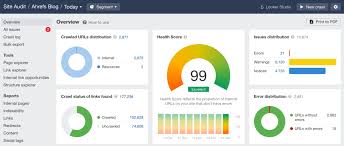
How to Check Your Website’s SEO Rating
A website’s SEO rating gives you an indication of how well it is prepared to appear in search engine results. It can help highlight technical problems, missing information and opportunities to improve. However, there is no single official SEO score used by Google, and a rating should be treated as a guide rather than a guarantee of rankings.
What is an SEO rating?
An SEO rating is a score or assessment produced by a tool that checks selected aspects of a website’s search engine optimisation. Depending on the service, it may review page titles, meta descriptions, headings, mobile usability, loading speed, links, site security and other technical or content-related factors.
Different tools use different methods, so the same website may receive different scores from different services. A high rating does not necessarily mean a page will rank well, while a low score does not always mean there is a serious problem.
What does an SEO rating website check?
Most SEO rating websites look at several areas:
- On-page SEO: Page titles, headings, meta descriptions, image text and the relevance of the content.
- Technical SEO: Whether search engines can access and understand the site, including its structure, redirects and mobile compatibility.
- Page performance: How quickly pages load and whether they offer a smooth experience on different devices.
- Links: Internal links between pages and links from other websites.
- Security: Whether the website uses HTTPS and protects visitors’ connections.
- Local SEO: For businesses serving a particular area, details such as location information and consistent business listings.
How to use an SEO rating website
Start by entering the website address into a trusted SEO checker. Review the findings and prioritise issues that affect access, usability or important pages. For example, broken pages, missing title tags or a website that is difficult to use on a mobile phone may deserve attention before minor recommendations.
Use the results to create a practical list of improvements. After making changes, check the relevant pages again and monitor organic traffic, impressions and clicks over time. Search performance can take time to respond, so avoid expecting an immediate rise in rankings.
Choosing an SEO checker
Before relying on a website rating tool, consider what it checks, how clearly it explains its results and whether it distinguishes between critical errors and optional suggestions. Some services provide a free, limited report, while others offer more detailed audits through a paid subscription.
Be cautious of tools that promise guaranteed rankings or present a single score as a complete measure of SEO success. A useful checker should explain its recommendations and give you enough information to decide what action, if any, is appropriate.
Look beyond the score
An SEO rating is only one part of assessing a website. Search engines consider many signals, and a score from an automated tool cannot fully judge the usefulness, accuracy or originality of a page. Strong SEO also depends on understanding what your audience is looking for and providing clear, relevant content that meets that need.
Use an SEO rating website as a starting point: identify issues, make sensible improvements and measure the results. A consistent approach is more valuable than chasing a perfect score.
Top 6 Tips to Enhance Your Website’s SEO Rating
- Use clear, descriptive page titles and meta descriptions.
- Create helpful content that matches search intent.
- Improve page speed, especially on mobile.
- Use simple URLs and organise pages logically.
- Add relevant internal links between pages.
- Check for broken links and indexing issues regularly.
Use clear, descriptive page titles and meta descriptions.
Use clear, descriptive page titles and meta descriptions to help people and search engines understand what each page is about. Keep titles concise, include the page’s main topic naturally, and write a unique meta description that accurately summarises its content. While meta descriptions may not directly improve rankings, they can encourage searchers to click through when your page appears in results.
Create helpful content that matches search intent.
Create helpful content that matches search intent by first understanding what people hope to find when they enter a search query. They may be looking for a straightforward answer, a detailed guide, a product comparison or a local service. Shape your content around that need, provide accurate and useful information, and make it easy to read and navigate. An SEO rating website can flag content-related opportunities, but the priority should be satisfying visitors—not adding keywords simply to improve a score.
Improve page speed, especially on mobile.
Improve page speed, especially on mobile, to make your website easier and more enjoyable to use. Slow-loading pages can frustrate visitors, who may leave before the content appears, and can affect how well your site performs in search results. Use an SEO rating website to identify issues such as oversized images, unnecessary scripts or slow server response times, then address the most important problems first. Recheck your pages on mobile after making changes to track improvements.
Use simple URLs and organise pages logically.
Use simple, descriptive URLs and organise your pages in a logical structure to make your website easier for visitors and search engines to understand. Keep addresses concise, use relevant words separated by hyphens, and avoid unnecessary numbers or complicated strings. Group related pages under clear categories so people can find what they need quickly and search engines can understand how your content fits together.
Add relevant internal links between pages.
Add relevant internal links between pages to help visitors find useful information and move around your website easily. Link naturally from one page to another using clear, descriptive anchor text, so readers and search engines can understand what the linked page is about. Prioritise links that genuinely support the reader, such as connecting a service page to a related guide or linking an article to further information.
Check for broken links and indexing issues regularly.
Check your website regularly for broken links and indexing issues to help visitors and search engines find the pages they need. Broken links can lead to frustrating dead ends, while indexing problems may prevent important pages from appearing in search results. Use an SEO rating website or search engine tools to spot errors, then fix outdated links, update redirects and check that key pages can be crawled and indexed.
Tags: https security, internal links, local seo, meta descriptions, mobile usability, on-page seo, organic traffic, page speed, page titles, relevant content, search engine optimization, search rankings, search results, seo audit, seo rating, seo rating website, technical seo, website seo checker