
SEO Site Checkup Score: What It Means and How to Improve It
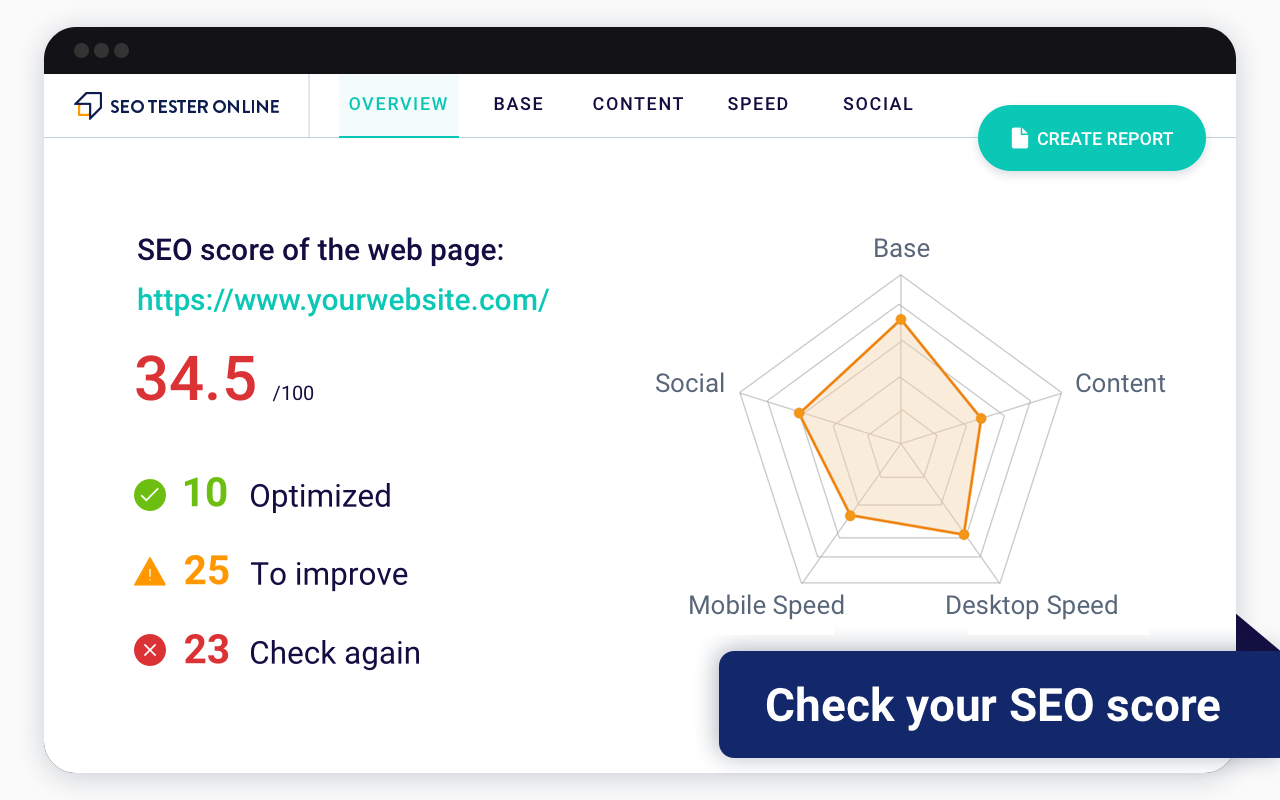
An SEO Site Checkup score is a snapshot of how well a website meets a set of technical and on-page search engine optimisation (SEO) checks. Tools such as SEO Site Checkup review areas including page titles, meta descriptions, headings, mobile usability, page speed, security and links, then present their findings as a score or report.
The score can be a useful starting point for improving a website, but it should not be treated as a guarantee of search rankings. Search engines consider many signals, and a single tool cannot assess every factor that affects visibility or user experience.
What does the score measure?
The exact checks depend on the tool and its settings. A typical report may look at:
- On-page SEO: page titles, meta descriptions, heading structure and image alt text.
- Technical SEO: crawlability, sitemap availability, redirects and canonical tags.
- Mobile usability: whether pages display and work well on smaller screens.
- Performance: factors that can affect loading speed and page responsiveness.
- Security: whether the site uses HTTPS and has other basic security measures in place.
- Links: internal links that help visitors and search engines navigate the site.
- Social and sharing details: information that can affect how pages appear when shared.
Some checks are straightforward to verify, while others are indicators rather than definitive judgements. For example, a tool may flag a technical setting that is not relevant to every website.
Is a higher score always better?
A higher score generally means that the site has passed more of the checks included in that particular report. However, it does not necessarily mean the site will rank higher than its competitors. SEO Site Checkup scores are not search engine ranking factors; they are summaries created by the tool.
A website can receive a strong score and still struggle to attract visitors if its content does not meet people’s needs, its pages target the wrong search terms, or it lacks a clear reason for users to choose it. Equally, a lower score may highlight minor issues that have little effect on the site’s main goals.
How to use an SEO Site Checkup report
- Review the individual findings. Look beyond the headline score and read what each warning or recommendation means.
- Prioritise important issues. Start with problems that prevent search engines or users from accessing key pages, followed by mobile usability, security and significant performance issues.
- Check recommendations before making changes. A generic suggestion may not suit your site’s platform, design or business needs.
- Fix issues in manageable stages. Record what has changed so you can identify whether it improved the site.
- Run the check again. A follow-up report can confirm that particular issues have been addressed, but it should be considered alongside other evidence.
Common areas to improve
Page titles and meta descriptions
Give each important page a clear, accurate title that describes its subject. Write a useful meta description to help people understand what the page offers in search results. Avoid repeating the same wording across every page or adding keywords where they do not read naturally.
Mobile experience
Check that pages are easy to read and use on a mobile phone. Text should be legible, links and buttons should be easy to tap, and important content should not be hidden or difficult to reach.
Page speed and performance
Slow pages can frustrate visitors. Large images, unnecessary scripts and poorly configured hosting can all contribute to delays. Measure performance and investigate the causes before making changes, as some improvements require technical support.
Useful, well-organised content
SEO tools can check page structure, but they cannot fully judge whether content is helpful, accurate and written for its intended audience. Make sure each page answers a clear need, uses headings logically and links to relevant information elsewhere on the site.
Technical accessibility
Check that important pages can be reached by search engines and visitors. Review your robots.txt file, sitemap, redirects and canonical tags carefully, especially after a site redesign or migration. Incorrect changes can make pages harder to find.
Use more than one source of information
An SEO Site Checkup report is most useful when combined with other data. Search Console can help identify indexing and search performance issues, while analytics tools can show how people use the site. Manual testing on different devices can also reveal problems that an automated scan may miss.
Final thoughts
An SEO Site Checkup score is best viewed as a practical checklist, not a final verdict on a website’s SEO. Use it to spot possible improvements, confirm technical basics and guide further investigation. Focus on changes that make the site easier to find, understand and use, rather than chasing a perfect score for its own sake.
Maximise Your Website’s Potential: 6 Benefits of SEO Site Checkup Scores
- Quick overview of key SEO issues.
- Highlights technical improvements to consider.
- Easy-to-understand score for a first check.
- Helps prioritise on-page fixes.
- Useful for tracking progress over time.
- Can prompt regular website health checks.
Five Limitations of Relying on SEO Site Checkup Scores
- Does not guarantee higher search rankings.
- May overlook important SEO issues.
- Can produce false or irrelevant warnings.
- A single score oversimplifies SEO performance.
- Some recommendations may require technical expertise.
Quick overview of key SEO issues.
One of the main benefits of an SEO Site Checkup score is that it gives you a quick overview of key SEO issues affecting your website. Rather than checking every page manually, you can use the report to spot common problems—such as missing meta descriptions, broken links or slow-loading pages—and decide which ones to investigate first.
Highlights technical improvements to consider.
An SEO Site Checkup score can highlight technical improvements worth considering, such as fixing broken links, improving page speed, checking mobile usability or reviewing site security. Its report helps turn potential issues into a practical checklist, making it easier to decide what to investigate and prioritise. Each recommendation should still be checked against the needs of your website before changes are made.
Easy-to-understand score for a first check.
One of the main benefits of an SEO Site Checkup score is that it offers a quick, easy-to-understand first look at a website’s SEO health. Instead of working through a long list of technical details straight away, you can use the score to see how the site is performing overall and whether there are areas worth investigating. It is a useful starting point for beginners, although the individual findings should be reviewed before deciding what to fix.
Helps prioritise on-page fixes.
An SEO Site Checkup score can help prioritise on-page fixes by highlighting issues such as missing page titles, duplicate meta descriptions, unclear heading structure or images without descriptive alt text. Reviewing these findings makes it easier to tackle the most important improvements first, rather than guessing where to begin. Addressing relevant issues can make pages clearer for visitors and easier for search engines to understand.
Useful for tracking progress over time.
One of the benefits of an SEO Site Checkup score is that it can help you track your website’s progress over time. By running regular checks and comparing the results, you can see whether changes—such as improving page titles, fixing technical issues or optimising images—have resolved previous problems. Although the score should not be treated as a measure of search rankings, it offers a handy way to monitor completed improvements and identify areas that may still need attention.
Can prompt regular website health checks.
An SEO Site Checkup score can encourage regular website health checks by giving you a straightforward way to review key technical and on-page SEO factors over time. Running checks periodically can help spot issues such as broken links, missing page details or performance problems before they affect visitors or search visibility. Used alongside other tools and manual reviews, the score can help make website maintenance a consistent part of your routine.
Does not guarantee higher search rankings.
A high SEO Site Checkup score does not guarantee higher search rankings. The score reflects how well a website meets the checks included in the tool, but search engines use many other signals, including the relevance and quality of content, competition and user needs. Treat the score as a guide to potential improvements, rather than a promise of better visibility in search results.
May overlook important SEO issues.
One drawback of an SEO Site Checkup score is that it may overlook important SEO issues. Automated tools can only assess the factors they are designed to check, so they may miss problems with content quality, search intent, user experience or the way a site competes in its market. Treat the score as a useful starting point, rather than a complete diagnosis, and combine it with expert review and data from other SEO tools.
Can produce false or irrelevant warnings.
One drawback of an SEO Site Checkup score is that it can produce warnings that are false, overly generic or irrelevant to a particular website. Automated tools apply standard checks, so they may flag an issue that is already handled appropriately or does not affect the site’s goals. Treat each recommendation as a prompt to investigate rather than an instruction to follow blindly, and verify whether the issue genuinely needs attention before making changes.
A single score oversimplifies SEO performance.
A key drawback of an SEO Site Checkup score is that it can oversimplify a complex picture. SEO depends on many factors, including the quality and relevance of content, competition, user experience and a site’s technical health, which cannot always be captured in one number. A high score does not guarantee strong search rankings, while a lower score may reflect minor issues with little practical impact. It is therefore more useful to review the report’s individual findings than to focus on the overall score alone.
Some recommendations may require technical expertise.
Some SEO Site Checkup recommendations may require technical expertise to understand and implement safely. Changes to redirects, canonical tags, server settings or site code can cause problems if handled incorrectly, potentially affecting how pages work or appear in search results. If you are unsure what a recommendation means, seek advice from a qualified developer or SEO professional before making changes.
Tags: canonical tags, content quality, crawlability, heading structure, https, image alt text, internal links, meta descriptions, mobile experience, mobile usability, on-page seo, page speed, page titles, redirects, search console, search engine optimisation, search rankings, search visibility, seo, seo audit, seo report, seo site checkup score, sitemap, technical accessibility, technical seo, user experience, website analytics, website optimisation, website performance, website security