
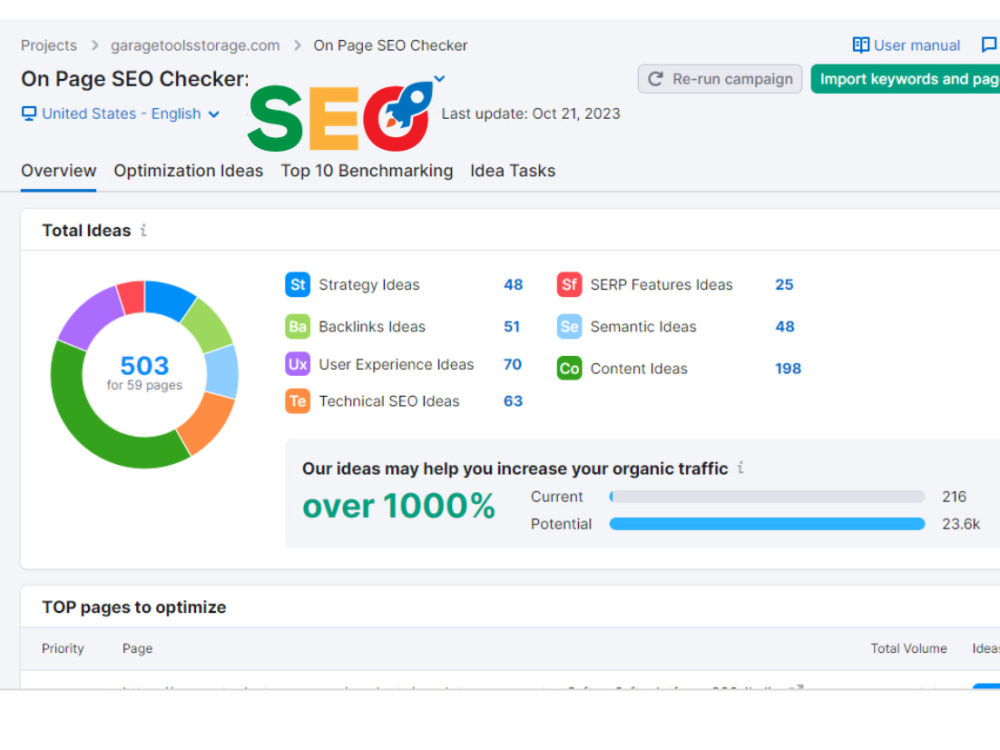
SEO Page Score: What It Means and How to Improve It
An SEO page score is an estimate of how well a web page follows selected search engine optimisation (SEO) recommendations. SEO tools use different checks and scoring systems, so a score can be useful for spotting areas to improve—but it is not a direct measure of how highly a page will rank in Google or other search engines.
What does an SEO page score measure?
Depending on the tool, a page score may assess factors such as:
- Page titles and descriptions: whether the page has a clear title and a useful meta description.
- Content and keywords: whether the page answers the likely needs of its audience and uses relevant terms naturally.
- Headings: whether headings organise the content and make it easier to read.
- Images: whether images have suitable file sizes and descriptive alternative text where appropriate.
- Links: whether the page links to relevant pages on the same website and useful external sources.
- Technical details: whether the page can be crawled and indexed, uses HTTPS, and works well on mobile devices.
- Performance and accessibility: whether the page loads efficiently and is usable by a wide range of people.
Not every SEO checker evaluates the same factors. Some focus on technical issues, while others assess content, links or general best practice. This means scores from different tools are not always comparable.
Does a higher score mean better rankings?
Not necessarily. Search engines consider many signals, including how relevant and useful a page is, the quality of information on the site, and the context of a search. An SEO tool’s score is a guide created by that tool; it is not a search engine ranking, a guarantee of visibility or a complete assessment of content quality.
A page can receive a high score and still fail to meet visitors’ needs. Equally, a page with a lower score may perform well if it provides the clearest, most helpful answer for its audience. Use a score to identify practical improvements, not as the sole measure of success.
How to improve an SEO page score
Match the page to the reader’s needs
Before changing keywords or headings, consider what someone wants to find when they arrive. Make the main purpose of the page clear, answer relevant questions and include useful detail. Avoid adding material simply to make the page longer.
Write a clear title and meta description
Give each important page a distinct title that describes its subject. A meta description should summarise what the page offers and help people decide whether to visit. Search engines may choose to display different text in results, so treat descriptions as helpful summaries rather than guaranteed snippets.
Organise content with descriptive headings
Use one clear main heading and arrange the rest of the page into logical sections. Headings should describe the content that follows, helping visitors scan the page and understand its structure.
Use search terms naturally
Include the words and phrases people are likely to use when they are relevant to the subject. Do not repeat keywords unnaturally or write primarily for a scoring tool. Clear, original content is more useful than text written to meet a keyword quota.
Review technical and mobile usability
Check that the page loads properly, works on mobile screens and can be reached through the site’s navigation or relevant links. Investigate issues such as broken links, accidental blocking from search engines, duplicate pages and slow-loading resources.
Make images and links useful
Use appropriately sized images and add alternative text when an image conveys information that visitors need. Link to related pages using descriptive wording, and cite trustworthy external sources when they support the content.
Using SEO scores effectively
Start with issues that could prevent a page from being accessed, understood or indexed. Then consider improvements to the page’s relevance, clarity and usefulness. Review important pages regularly, especially after substantial changes, and compare performance over time using measures such as organic visits, impressions and relevant search queries.
An SEO page score is best treated as a checklist—not a target in itself. The strongest improvements are those that make a page easier to find, understand and use while giving visitors a reliable answer to what they came for.
9 Benefits of Using an SEO Page Score
- Highlights SEO improvements.
- Checks page titles and descriptions.
- Reviews heading structure.
- Flags missing image alt text.
- Identifies broken links.
- Encourages mobile-friendly design.
- Can reveal technical issues.
- Helps track optimisation progress.
- Offers a useful page checklist.
Six Drawbacks of SEO Page Scores
- Scores vary between SEO tools.
- A high score does not guarantee better rankings.
- Some checks prioritise minor issues.
- Scores may overlook content quality.
- Chasing points can encourage keyword stuffing.
- Results can become outdated as search algorithms change.
Highlights SEO improvements.
An SEO page score helps highlight areas where a page could perform better in search results. It can flag issues such as missing metadata, unclear headings, slow loading times or opportunities to improve content, giving website owners a practical starting point for making targeted improvements.
Checks page titles and descriptions.
A useful benefit of an SEO page score is that it checks whether your page has a clear title and meta description. These elements help search engines understand the page and can give people a better idea of what to expect from it in search results. A score tool can flag missing, unclear or overly long titles and descriptions, making it easier to improve how your page is presented.
Reviews heading structure.
Reviewing heading structure is a useful benefit of an SEO page score because it helps show whether a page is organised into clear, logical sections. Well-structured headings make content easier to scan, help visitors find the information they need and give search engines a clearer understanding of the page. Use one descriptive main heading, followed by relevant subheadings, and ensure each heading accurately reflects the content beneath it.
Flags missing image alt text.
A key benefit of an SEO page score is that it can flag images with missing alt text. Adding concise, descriptive alternative text helps people using screen readers understand the information an image conveys and gives search engines useful context about its content. This simple check can therefore support accessibility while helping make a page clearer and more complete.
Identifies broken links.
An SEO page score can help identify broken links that may frustrate visitors and make it harder for search engines to explore your website. Fixing or replacing these links improves the browsing experience, helps people reach relevant information and supports a well-maintained site.
Encourages mobile-friendly design.
An SEO page score can encourage mobile-friendly design by highlighting issues that affect how a page works on smartphones and tablets. It may flag slow loading, text that is difficult to read, or buttons and links that are hard to tap. Addressing these problems can make the site easier to use on smaller screens, improving the experience for visitors wherever they browse.
Can reveal technical issues.
An SEO page score can help reveal technical issues that may affect how a page is crawled, indexed or used. Depending on the tool, it might flag broken links, missing title tags, slow loading times, mobile usability problems or pages that search engines cannot access. Identifying these issues gives you a useful starting point for making improvements, though each warning should be checked in context before changes are made.
Helps track optimisation progress.
An SEO page score helps track optimisation progress by showing how a page performs against a consistent set of checks over time. Comparing scores before and after updates can reveal whether changes—such as improving headings, refining page titles or fixing technical issues—have addressed identified problems. While the score is only a guide and does not guarantee higher search rankings, it can make progress easier to monitor and highlight areas that may need further attention.
Offers a useful page checklist.
An SEO page score offers a useful checklist for reviewing the key elements of a web page. It can highlight areas to check, such as the page title, headings, content, links, images and mobile usability, helping you spot possible improvements in one place. Use the checklist as a guide rather than a strict formula, and prioritise changes that make the page clearer and more helpful for visitors.
Scores vary between SEO tools.
SEO page scores can vary between tools because each uses its own criteria, weighting and scoring scale. One tool may prioritise technical checks, while another focuses more on content or keywords, so the same page can receive very different scores. This can make results confusing and means scores are best used to identify specific issues rather than compared directly or treated as a definitive measure of SEO quality.
A high score does not guarantee better rankings.
A high SEO page score does not guarantee better search rankings. These scores are produced by tools that check selected SEO factors, while search engines use many signals to decide which pages to show. Rankings also depend on how useful and relevant a page is to the search, the quality of its content and the competition. Treat your score as a guide to possible improvements, rather than a promise of visibility.
Some checks prioritise minor issues.
One drawback of an SEO page score is that some checks can give too much attention to minor issues, such as small wording changes or image details, while more important concerns receive less emphasis. This can lead website owners to spend time chasing a higher score instead of improving the page’s usefulness, accuracy, accessibility or overall performance. Treat the score as a guide, and prioritise changes that make a meaningful difference to visitors.
Scores may overlook content quality.
One drawback of an SEO page score is that it may overlook the quality of the content itself. A page can tick technical boxes and achieve a high score while still being inaccurate, unhelpful or poorly written. Scores should therefore be treated as a guide to potential improvements, not a substitute for checking that the content is clear, trustworthy and genuinely useful to readers.
Chasing points can encourage keyword stuffing.
Chasing a higher SEO page score can encourage keyword stuffing: adding the same search terms repeatedly in an attempt to satisfy a scoring tool. This can make content awkward and difficult to read, while doing little to help visitors. Use relevant keywords naturally and prioritise clear, useful information over achieving a perfect score.
Results can become outdated as search algorithms change.
One drawback of an SEO page score is that its results can become outdated as search algorithms and best practice change. A page that scores well today may no longer meet current recommendations later, while scoring tools may take time to update their checks. Treat the score as a helpful snapshot rather than a permanent measure, and review important pages regularly to ensure they remain useful, accessible and technically sound.
Tags: accessibility, content quality, crawlability, external links, headings, https, image alt text, indexing, internal links, keywords, meta descriptions, mobile usability, organic visits, page performance, page titles, search engine optimisation, search intent, search rankings, seo best practices, seo page score, seo tools, technical seo