
SEO Score and Ranking: What You Need to Know
An SEO score can be a useful way to check how well a webpage follows common search engine optimisation practices. It may highlight issues such as missing title tags, slow loading times or broken links. However, an SEO score is not the same as a search engine ranking—and it does not guarantee that a page will appear near the top of Google’s results.
What is an SEO score?
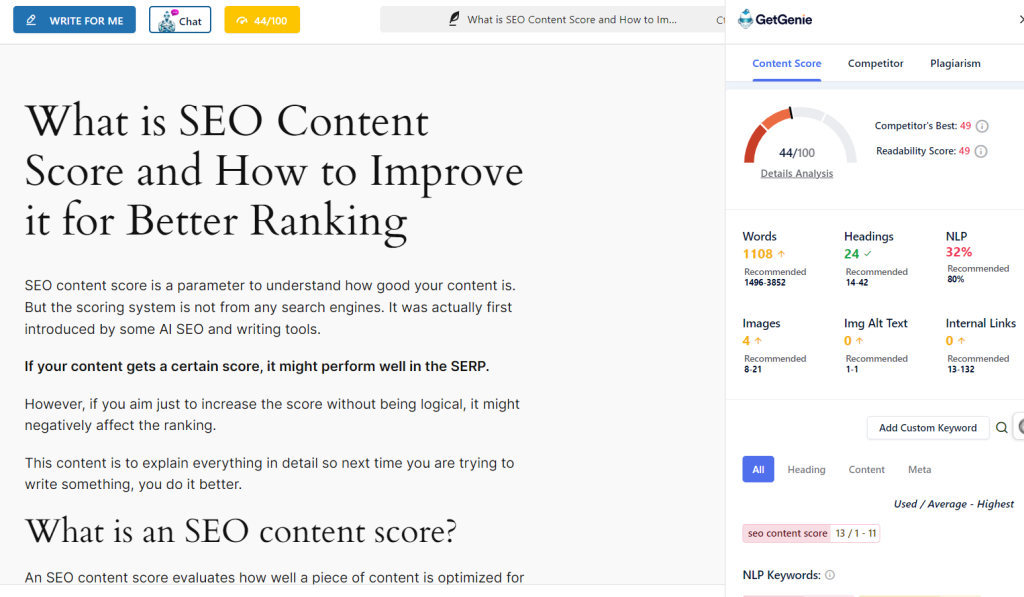
An SEO score is an estimate produced by an SEO tool after it checks a website or webpage against a set of criteria. These criteria vary between tools, so the same page may receive different scores from different platforms.
A score may cover areas such as:
- Technical SEO: whether search engines can access and understand the site.
- On-page SEO: page titles, headings, content and internal links.
- Performance: loading speed and usability on mobile devices.
- Accessibility and structure: how clearly content is organised and presented.
- Links: links between pages on the site and links from other websites.
Does an SEO score affect rankings?
Usually, the score itself does not affect rankings. Search engines do not simply take a third-party tool’s score and use it to decide where a page should appear. The score is a diagnostic guide, while rankings are determined by many factors, including relevance, quality, usefulness, technical accessibility and the searcher’s context.
Some elements measured by SEO tools can matter indirectly. For example, improving a page’s loading performance may make it easier and more pleasant to use. Clear headings and helpful content can also make a page easier for visitors—and search engines—to understand. But raising a score alone does not guarantee more traffic.
Why scores differ between SEO tools
Each SEO platform uses its own checks, data and weighting. One tool may give considerable weight to technical details, while another may focus more on links or content. Some checks are also based on general recommendations rather than direct ranking factors.
For that reason, treat a score as a starting point, not a definitive measure of your site’s quality. A page with a lower score may still perform well in search results if it meets users’ needs and is relevant to their search. Equally, a high score does not guarantee strong rankings.
How to use an SEO score effectively
- Look beyond the overall number. Review the individual recommendations and identify issues that could affect visitors or prevent search engines from accessing important pages.
- Prioritise problems by impact. Fix serious technical errors, broken pages and poor mobile usability before spending time on minor checklist items.
- Improve the content for readers. Answer the questions your audience is asking, use clear language and organise information with descriptive headings.
- Check performance over time. Monitor organic traffic, impressions, clicks and conversions alongside your SEO score.
- Use more than one source of evidence. Combine audits with search analytics, website data and feedback from real users.
Focus on rankings and results, not just scores
A useful SEO strategy is built around helping people find relevant, reliable information and giving them a good experience once they reach your site. An SEO score can help uncover opportunities, but it should not become the goal in itself.
Use scores to guide investigations, make improvements that benefit visitors, and track whether those changes lead to meaningful results. Better visibility may take time, and no score or checklist can promise a particular ranking.
8 Tips to Improve Your SEO Score and Search Rankings
- Treat SEO scores as guidance, not Google ranking guarantees.
- Use relevant keywords naturally in titles and headings.
- Write helpful, original content that meets search intent.
- Make every page mobile-friendly and quick to load.
- Use clear URLs and descriptive page titles.
- Add useful internal links between related pages.
- Earn quality backlinks from trusted websites.
- Fix broken links and keep content up to date.
Treat SEO scores as guidance, not Google ranking guarantees.
Treat SEO scores as useful guidance, not a guarantee of where your website will rank on Google. These scores come from third-party tools and highlight potential areas for improvement, but Google uses many factors to decide which pages appear in search results. Focus on fixing issues that affect visitors and creating relevant, helpful content, then monitor your rankings and organic traffic over time.
Use relevant keywords naturally in titles and headings.
Use relevant keywords naturally in your page titles and headings to help both readers and search engines understand what your content is about. Choose phrases that reflect the topic and match the terms your audience is likely to search for, but avoid forcing them into every heading. Clear, descriptive wording is more useful than keyword repetition and helps make your page easier to scan.
Write helpful, original content that meets search intent.
Write helpful, original content that matches what people are actually looking for when they search. Consider the questions behind their search, then answer them clearly and accurately, adding useful detail or first-hand insight where it helps. Avoid copying other pages or adding filler just to include keywords. Content that genuinely meets search intent is more valuable to readers and can support stronger search performance over time—but no single tip can guarantee a particular ranking.
Make every page mobile-friendly and quick to load.
Make every page mobile-friendly and quick to load, so visitors can find and use your content easily on any device. Use responsive design, optimise images and remove unnecessary scripts to improve loading times. A smooth mobile experience can help reduce frustration and encourage visitors to stay, while supporting your wider SEO efforts.
Use clear URLs and descriptive page titles.
Use clear URLs and descriptive page titles to help visitors and search engines understand what each page is about. Keep URLs short, readable and relevant, using words that reflect the page’s subject rather than long strings of numbers or unnecessary characters. Write a unique, concise title for every page, placing the main topic near the beginning where it reads naturally. These steps can improve clarity in search results and support a better user experience, though they do not guarantee higher rankings.
Add useful internal links between related pages.
Add useful internal links between related pages to help visitors discover more relevant information and move around your website with ease. Clear, descriptive link text also helps search engines understand how your pages relate to one another, which can support better crawling and indexing. Link naturally where it adds value for the reader, rather than adding links simply to increase your SEO score.
Earn quality backlinks from trusted websites.
Earn quality backlinks from trusted websites to strengthen your site’s authority and improve its visibility in search results. A relevant link from a reputable source can signal that your content is useful and trustworthy, but quality matters more than quantity. Focus on creating valuable content that others genuinely want to reference, and build relationships with respected organisations in your field. Avoid buying links or using manipulative schemes, as these can harm your site’s performance.
Fix broken links and keep content up to date.
Fixing broken links and keeping content up to date can support a healthier website and a better experience for visitors. Check regularly for links that lead to missing or outdated pages, then repair them, replace them with relevant sources or remove them. Review older content too, updating facts, dates and recommendations so it remains accurate and useful. These steps won’t guarantee higher search rankings, but they can make your site easier to navigate and help maintain its value for readers.
Tags: accessibility, backlinks, content quality, google rankings, internal links, loading speed, mobile usability, on-page seo, organic traffic, ranking factors, relevance, search analytics, search engine accessibility, search engine ranking, search results, seo audit, seo score, seo score ranking, seo tools, technical seo, user experience, website performance