
SEO Score of a Website: What It Means and How to Improve It
A website’s SEO score is a measure used to assess how well a page or site follows search engine optimisation best practices. It can help identify issues that may affect visibility in search results, such as slow loading times, missing page titles or broken links.
However, there is no single, universal SEO score. Different tools use different checks and scoring systems, and Google does not assign websites a public SEO score. Treat the number as a guide to potential improvements, rather than a direct measure of rankings or business performance.
What does an SEO score measure?
SEO audit tools typically assess a range of factors, which may include:
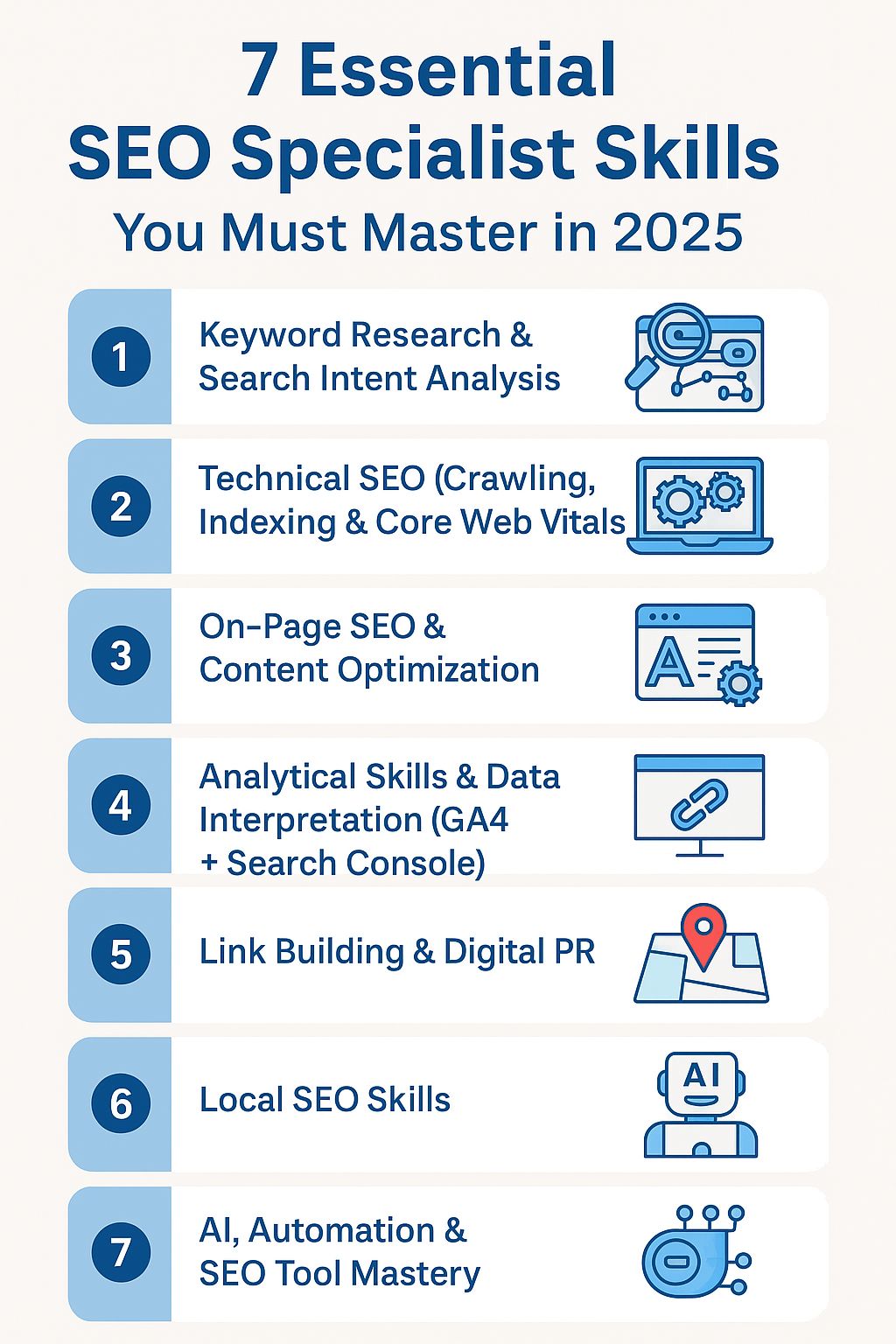
- Technical SEO: whether search engines can crawl and index your pages, and whether your site uses HTTPS and has a clear structure.
- On-page SEO: the quality and relevance of page titles, headings, content, image descriptions and internal links.
- Mobile usability: how well the website works on smartphones and tablets.
- Page speed: how quickly pages load and respond to visitors.
- Content quality: whether pages provide useful, original information that meets the needs of their audience.
- Links: whether internal links work and whether other relevant, trustworthy websites link to your content.
Not every tool checks all of these areas. Some focus on technical errors, while others concentrate on content or backlinks. As a result, the same website may receive different scores from different services.
Does a higher SEO score mean higher rankings?
Not necessarily. An audit score is not the same as a search ranking, and improving a score does not guarantee that a page will appear higher in search results. Search engines consider many signals, including relevance, content usefulness, competition and the context of a search.
Scores are most useful for spotting problems and tracking progress over time. If you use an audit tool, focus on the recommendations behind the number rather than trying to achieve a perfect score.
How to improve your website’s SEO
Fix technical issues
Make sure important pages can be crawled and indexed. Check for broken links, redirect errors, duplicate pages and accidental restrictions in your robots.txt file or page settings. An XML sitemap can also help search engines discover key pages.
Improve page titles and headings
Give each important page a clear, descriptive title that reflects its content. Use headings to organise the page for readers, rather than adding keywords where they do not belong. Avoid using the same title across multiple pages.
Create useful, relevant content
Write for the people you want to reach. Answer their questions clearly, provide accurate information and keep content up to date. Avoid repeating the same phrases simply to include more keywords; this can make pages harder to read without making them more useful.
Make the site work well on mobile
Check that text is easy to read, navigation is straightforward and buttons are simple to use on smaller screens. A mobile-friendly layout should make the main content accessible without unnecessary zooming or horizontal scrolling.
Improve loading speed
Large image files, unnecessary scripts and poorly configured hosting can slow a website down. Compress images, remove features you no longer need and test key pages with performance tools. Aim to make the experience fast and reliable for visitors on different devices and connections.
Use internal links thoughtfully
Link related pages together using clear, descriptive link text. This helps visitors find useful information and gives search engines a better understanding of how your website is organised.
How to monitor SEO progress
Use an SEO audit tool to identify potential issues, then check the findings rather than accepting every recommendation automatically. Some warnings may not matter for your particular website, while serious problems may not have a large effect on the overall score.
For a broader view, monitor organic traffic, search impressions, clicks and the queries that bring people to your site. These measures can help show whether your pages are reaching the right audience. Review changes over time, as SEO results can take weeks or months to become clear.
In summary
An SEO score is a useful starting point for reviewing a website, but it is not a definitive measure of quality or a guarantee of search rankings. Use it to uncover practical improvements, prioritise issues that affect visitors and search engine access, and measure progress with meaningful performance data.
Website SEO Score: 7 Frequently Asked Questions
- What is an SEO score for a website?
- How is a website’s SEO score calculated?
- What is a good SEO score for a website?
- Does a higher SEO score improve Google rankings?
- Which tools can I use to check my website’s SEO score?
- Why do different SEO tools give my website different scores?
- How can I improve my website’s SEO score?
What is an SEO score for a website?
An SEO score is an estimate from an audit tool of how well a website follows selected search engine optimisation best practices. It may assess factors such as page titles, mobile usability, loading speed, links and technical issues. There is no single official SEO score, and search engines do not use these tool scores directly to rank websites. Use the score as a guide to identify improvements, rather than as a guarantee of search performance.
How is a website’s SEO score calculated?
A website’s SEO score is usually calculated by an audit tool that checks factors such as crawlability, page titles, content, mobile usability, loading speed, broken links and backlinks. The tool assigns points or weights to these checks and combines them into an overall score, but the criteria and weighting vary between providers. There is no universal SEO score, and search engines do not publish a single score for websites, so it is best used as a guide to areas that may need improvement.
What is a good SEO score for a website?
A good SEO score depends on the tool being used, as there is no universal scoring system and search engines do not assign websites a public SEO score. Many audit tools consider a score of 80 or above strong, but the number is only a guide: focus on fixing important technical issues, creating useful content and making the site easy to use, rather than chasing a perfect score.
Does a higher SEO score improve Google rankings?
A higher SEO score does not automatically improve Google rankings. SEO scores are generated by third-party tools, and each uses different checks; Google does not use these scores as a direct ranking factor. Improving the issues identified by an audit—such as slow loading pages, broken links or unclear content—can help make your website more useful and accessible, which may support better search performance over time. Focus on fixing relevant problems and tracking real results, such as organic traffic and search visibility, rather than chasing a perfect score.
Which tools can I use to check my website’s SEO score?
You can check your website’s SEO with tools such as Google Search Console, which reports search performance and indexing issues, and Google PageSpeed Insights, which assesses page speed and user experience. Platforms including Ahrefs, Semrush, Moz and Screaming Frog offer broader SEO audits covering areas such as keywords, backlinks, technical errors and on-page optimisation. Each tool uses its own checks and scoring system, so treat its SEO score as a guide to potential improvements rather than a definitive measure of rankings.
Why do different SEO tools give my website different scores?
Different SEO tools can give your website different scores because each uses its own tests, data sources and weighting system. One tool may focus on technical issues, while another places more emphasis on content, backlinks or page speed. Scores can also vary depending on which pages were checked and when the site was crawled. Treat them as useful guides rather than directly comparable ratings, and focus on fixing the specific issues that matter to your visitors and website.
How can I improve my website’s SEO score?
To improve your website’s SEO score, use an SEO audit tool to identify issues such as slow-loading pages, broken links, missing page titles or poor mobile usability, then prioritise the fixes that will help visitors and search engines most. Create clear, useful content that matches what your audience is looking for, organise it with descriptive headings, and link related pages together. Scores vary between tools, so focus on steady improvements rather than aiming for a perfect score.
Tags: backlinks, broken links, content quality, crawl and index, headings, internal links, loading speed, mobile usability, mobile-friendly design, on-page seo, organic traffic, page speed, page titles, search engine optimisation, search impressions, search rankings, seo audit, seo performance, seo progress, seo score, seo score of a website, technical seo, useful content, website optimisation, website seo